

In memory of James Lew (1952-2026) and Screaming Mad George (1956-2026)
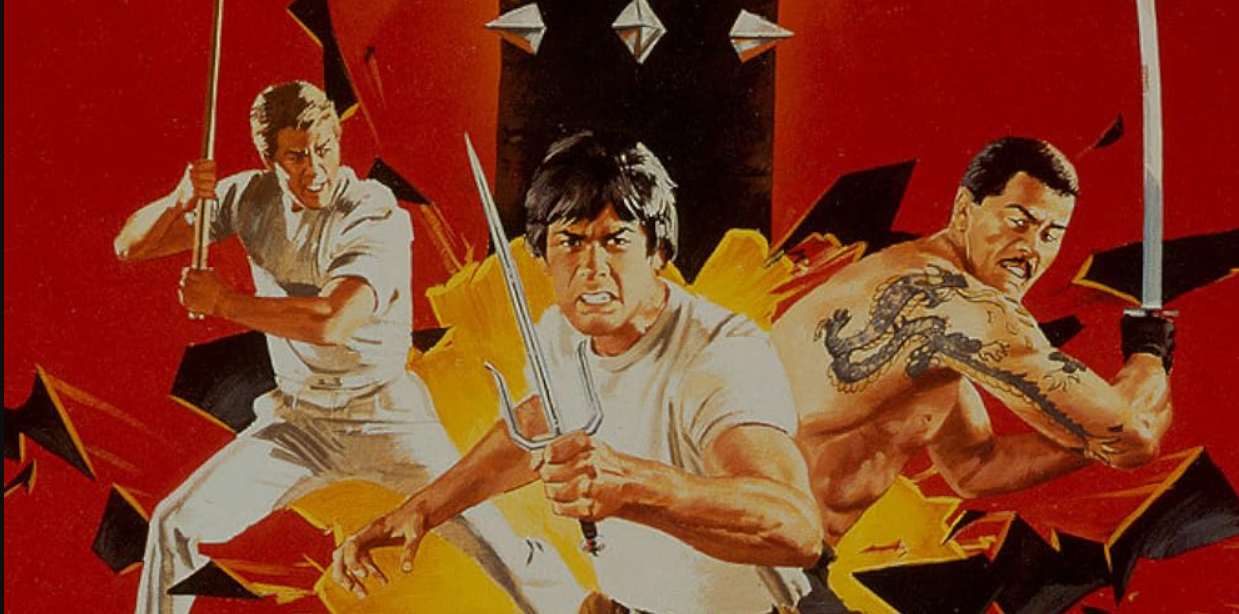
In 1985, a Tae Kwon Do master decided to launch his own film production company almost a full decade after making his film debut in a movie where he would be internationally known as a Bruce Lee clone during the rise of the Bruceploitation era. This little-known film would be known for having different titles, but who would have thought it would be a stepping stone for many who would make an impact in the worlds of action and stunts in later years?

Grandmaster Jun Chong founded Action Brothers Productions and using an original screenplay by Simon Blake Hong, later polished by Jaime Mendoza, the film, titles Los Angeles Streetfighters, would go into production in 1985. Perhaps one of the influences behind Chong forming the production to make action films is when two of his best-known students, brothers Simon and Phillip Rhee, were the stars of a 1984 film titled Furious, a wild spectacle that meshed martial arts, horror, science fiction, and influences from the likes of Ed Wood and Ted V. Mikels to name a few. That film would feature some of Chong’s students as extras and this one would prove the same.
The Heroes and the Crew


Richard Woo-Sang Park (1943-2006), a veteran of Korean martial arts action films from the 1970s and early 1980s would come to the United States to direct the film, his first of a few American-made films shot in the Los Angeles district of Koreatown. In charge of the film’s fight sequences would be Kwon Young-Moon, a veteran of Korean and Hong Kong martial arts films in the 1970s and 1980s who had worked with Jackie Chan, Hwang Jung-lee, John Liu, and many others.
The film revolves around a group of high school students who, after a rumble, get a moonlighting gig as private security for various events. When their leader stumbles across a drug dealer’s money, he steals the money in hopes to get away from his broken home. He is forced to contend with hitmen hired by the drug dealer but finds trouble with his arch-rival from school. There is an important characteristic with the leader’s complex relationship with the newest member of the group, although it’s not a love interest thing, but rather a brotherhood he feels is slowly collapsing due to the rookie’s relationship with a woman who happens to be the sister of the leader’s arch-rival.


Jun Chong takes on the role of Yong, the leader of the protagonist group, in which one wonders why a forty-year-old man is still in high school. Much like Howard Stern in his college scenes in his 1997 autobiopic Private Parts, one just must suspend the disbelief. The rookie member, Tony, is played by Chong’s student and Furious star Phillip Rhee. Rhee would later gain fame as Tommy Lee in the four-film Best of the Best franchise, which ran from 1989 to 1998, and returned to films after a seventeen-year hiatus with the family martial arts film Underdog Kids.
Another noteworthy member of the gang is Mark, who we see in a scene, celebrating his birthday with the gang and gets emotional as he mentions how he feels like the gang is more family to him than his own. Mark is played by Mark Hicks, who would later gain fame as Chris Tucker’s stunt double in the Rush Hour films and a viral clip where he is known as “Afro Ninja”, who in an audition, attempts and fails on a backflip while holding nunchakus. In 2000, Hicks would appear in a Hong Kong film, Benny Chan’s Gen-Y Cops, as a FBI agent alongside Hollywood stars Paul Rudd and Maggie Q. Dorin Mukama and Frank Marmolejo round out the cast of protagonists as Darrin and Frank respectively.
The Film
The film starts at school, where we see Tony meet up with Yong and the guys. Tony gets the attention of classmate Lily, played by Rosanna King, when he writes “Hi” on the bottom of his sneaker and shows it to her. We then see one of the main antagonists, Chan, played by stunt legend James Lew. At the time of production, Lew had already began his prolific career as a stuntman and extra in films and television. Like Yong, Chan has his own gang, which is bigger than Yong’s five-person unit. One of those gang members would become a major star in late 80s and 90s B-movie action cinema.

Loren Avedon appeared in the film as one of Chan’s gang members. Like the Rhee Brothers, Avedon was a protégé of Chong’s and had trained specifically under the Rhee Brothers, making a small appearance in Furious in 1984. Two years after production on this was completed, Avedon broke out when he replaced Kurt McKinney as the lead in No Retreat, No Surrender II: Raging Thunder for Seasonal Films. His 1990 film, King of the Kickboxers, is still hailed as one of his best films and continued success through the 90s and early 2000s before sporadically appearing in more recent films or talking about his achievements in films.
When Chan confronts Tony and warns him that he runs the school, Yong comes to the rescue and is challenged that night to a one-on-one fight in an alleyway. Starting with hand-to-hand combat, Chan attempts to use a bo staff on Yong, but the fearless leader retaliates using a wooden sword, a weapon used in Kumdo, a Korean martial art similar to Kendo. Yong gets the upper hand and learns that a couple had been watching. The couple runs a private security firm and, impressed with Yong, hires him and his group on the spot.
After their first job as a college party, it is here where we see the brotherhood of Yong and new member Tony start to grow. Yong explains to Tony that he only lives with his mother, who after being divorced from his dad, spends her nights drinking and living a promiscuous lifestyle. While Yong tries to reason with his mother, she constantly rebuffs him. Tony, on the other hand, is the son of local Koreatown grocers, who want nothing more than Tony to succeed while still living the life of a high school student.

During a security job at an event, the group finds themselves confronted by a redneck gang called The Spikes. After the group kicks them out, they are forced to face off against the Spikes as they are getting ready to leave for the night. We soon learn that this gang is racist when we hear one member in the background saying he wants Mark, the “black guy” of the group. Playing the Spikes’ leader is Danny Gibson, a respected martial artist who had refereed numerous tournaments and was an instructor. He would appear as an assistant aikido instructor in the 1991 live-action adaptation of Japanese manga and anime The Guyver, directed by the duo of special effects wizards Steve Wang and Screaming Mad George.
When the fight starts, one of the Spikes gang members is revealed to be a future icon in 80s cinema because of one particular role. After Tony is seen dispatching some of the Spikes with his kicks and some sword work, one of the Spikes is decked out in a red sleeveless shirt holding a sledgehammer to confront him. That member is played by Thomas F. Wilson, who that same year gained international fame as one of cinema’s beloved bullies, Biff Tannen (and his relatives), in Robert Zemeckis’ Back to the Future trilogy.
At the local parade, Chan is motivated by his gang to go on one of the floats despite his reluctance. He concedes and goes on, waving to the crowd. This is the only scene of the film where we see Chan in a positive manner. Meanwhile, Tony brings a delivery to Lily’s father, and she is excited to see him and asks her father if they can go to the parade. When Chan sees Lily and Tony together, he is obviously not happy and punches Tony in the face. It is here where we see the first signs of jealousy from Yong, as he sees Tony’s relationship as a means to break away from him. And it is not because he is jealous that Tony is seeing someone, but it is the relationship dynamic that is the threat because Yong sees Tony as the one person who can relate to him as immigrants who attempt to live the American Dream.
One night, Yong tells Tony that he should take a break from Lily and tries to get him to sleep with another woman. After unsuccessfully getting two women, mistaken them for prostitutes, Yong finally convinces a woman of the night to sleep with Tony, who ultimately rebuffs her and leaves. The duo head to a liquor store where they find themselves confront from some local hoods who want Yong’s money. Of course, Tony and Yong fend off the thugs with their martial arts skills.
The next confrontation for Yong and his boys come in the form of a local Chicano gang, The Blades, who were originally private security, or more, extortionists for a local Mexican restaurant. When Yong and his boys take over, the Blades challenge them to a fight the next afternoon in the middle of a dilapidated meadow area complete with what looks like a decrepit barn and junkyard. The Blades leader is played by John Rojas, a fellow Tae Kwon Do master who had run his own school at the time of production.
After Yong and his boys beat the Blades, Tony and Yong have a serious talk. Yong has been thinking about wanting to leave the United States and go back to his homeland of Korea. He feels like there isn’t much going on anymore due to his broken homelife. Tony, on the other hand, finds himself in a happier place there thanks to his relationships with Lily and the others.

The next night, Yong and the boys are hired to do security for a lavish party run by a businessman, who turns out to be a major drug dealer. It is here where the film picks up after for most of the film, we have had the gang taking on rival gangs. When Yong discovers the money the drug dealer had made and finds the suitcase while the dealer is canoodling in the bath with his girlfriend, played by B-movie siren and scream queen legend Brinke Stevens, Yong takes the money and runs, hoping to be able to leave for good.

The dealer discovers the missing money and hires two men, Yoshida and Kruger, to find Yong and his boys and teach them a lesson. As for the money, the dealer tells them it’s not about the money, but to teach them a lesson, to show not to ever disrespect a man of his reputation. Yoshida is played by Ken Nagayama, a martial artist who appeared as one of the Korean team members in Best of the Best and later found work as a stunt coordinator and fight choreographer, notably in a 2014 live-action adaptation of the Japanese anime Kite.
Kruger, on the other hand, is played by one of the most respected martial artists in history. The role went to Bill Wallace, one of the first professional American kickboxers, known to all as the beloved “Superfoot” due to his impressive kicking from his left leg. Wallace made his film debut in 1980’s A Force of One opposite the legendary Chuck Norris and had a memorable fight with Jackie Chan in The Protector, released in 1985.

Yoshida and Kruger kidnap Mark, Frank, and Darrin and force Yong into a confrontation with first members of the dealer’s syndicate. One of the members would later gain fame for his roles in two films, which were made in the 1990s opposite Jean-Claude Van Damme. Credited in this film as Peter Lulgjuraj, this actor would be known as Peter Malota, appearing as the henchman with the spurs in 1991’s Double Impact before playing the Spanish flamenco fighter in The Quest, Van Damme’s directorial debut. Malota would later get his calling as a director and fight choreographer in indie films such as 2007’s Honor and directing Van Damme in 2012’s Kill ‘Em All.
After dispatching the syndicate, Yong faces off against Yoshida first, with the Japanese hitman using sais against Yong’s blade work. Yoshida is eventually bested by Yong, who makes his way upstairs and finds Mark, Darrin, and Frank tied up and beaten to a pulp. Yong soon goes one-on-one with Kruger and at first Kruger’s kicking proves to be too much until Yong finds an opening and ultimately defeats Kruger with a sweep kick that dislocates his knee.
Meanwhile, Yong’s mother, finally seeing the errors of her ways, looks for Yong and upon finding him with the others, promises to change her ways and become an actual mother to him. Seeing the injured Mark, Frank, and Darrin, she offers to help them get to the hospital when Chan and his gang shows up. Chan seeks revenge against Yong and Chan throws down Yong’s mother and proceeds to stab Chan in the abdomen with a knife.

Tony, having talked to Yong’s mother earlier, looks for Yong and eventually finds him brutalized and gravely injured. A visibly upset and distraught Tony decides enough is enough and pulls out his wooden sword from his trunk and even notices Yong’s mother unconscious. Finally confronting Chan and his gang, Tony singlehandedly takes out Chan’s gang and goes one-on-one with the leader and his girlfriend’s brother. At first Chan gets the upper hand, knifing Tony in the face and stabbing him in the leg. However, Tony finds the opening he needs and knocks the knife out of Chan’s hand before hitting him square in the head with his wooden sword, killing Chan.
Tony heads towards the mortally wounded Yong and his mother, now regaining consciousness, heads towards her son but it’s too late. Yong has succumbed to his injuries and we see a close up shot of Yong’s Korean passport as Tony and Yong’s mother grieve the fallen Yong as the sun starts to rise.

(Korean Movie Database)
The film would be released in South Korea as Chinatown in March of 1985, although it is believed that the film’s setting is Los Angeles’s Koreatown. In 1986, Columbia Pictures picked up the film for distribution and with the major Ninja craze happening thanks to Cannon Films’ output, released the movie as Ninja Turf. Manson International would release the film as simply L.A. Street Fighters.
Aftermath

Jun Chong would continue making films under the Action Brothers banner with Silent Assassins in 1987, starring Sam J. Jones, Linda Blair, and Phillip Rhee. The film was directed by the duo of Scott Thomas and Korean film director Lee Doo-yong. Lee had directed Chong’s debut film, 1976’s Visitor of America, released internationally with a new opening and titled Bruce Lee Fights Back from the Grave, where Chong was credited as “Bruce K.L. Lea”. That film also marked the film debuts of Phillip and Simon Rhee as minor thugs before appearing in the following year’s Kentucky Fried Movie as members of Bong Soo Han’s crew in the acclaimed “Fistful of Yen” segment.

Chong would follow that film up with 1990’s Street Soldiers, about two rival gangs, a high school gang and a street gang who are constantly at odds and grows bigger when a friend of the high school gang begins a relationship with the ex-girlfriend of the street gang leader. The film would mark the only American film to feature Korean martial arts powerhouse Hwang Jung-lee as the number one to the street gang leader, a mute ex-con who lets his skills do the talking. The high school gang turns towards another friend’s uncle, a martial arts teacher, played by Chong, to help them defend themselves only to get himself involved with his nephew is killed by Hwang, credited in the film as “Jason Hwang”.

After that film, Chong focuses solely on teaching but did attempt a comeback in 2006 under the Action Brothers label with the mixed martial arts craze going. The end result, Maximum Cage Fighting, a little known and little seen film that features Chong as the mentor of the protagonist. In 2015, he would play himself as a judge along with martial arts legend Richard Norton, Don “The Dragon” Wilson, Benny “The Jet” Urquidez, and Danny Inosanto in Phillip Rhee’s return to films, Underdog Kids.

Los Angeles Street Fighters’ fight choreographer, Kwon Young-Moon, would head to Florida after work on this film, along with Richard Woo-Sang Park, to work on a film with Orlando-based Tae Kwon Do master Y.K. Kim. The film, titled Miami Connection, had similar plot points to Los Angels Street Fighters, but had a very interesting story: a group of college students are also members of a band called Dragon Squad and are Tae Kwon Do black belts. They run afoul of a local biker gang who have allied themselves with a ninja gang to start a drug dealing operation in Orlando. As for the similar plot point? One of the Dragon Squad members is in a relationship with the biker gang leader’s sister. After its initial release in eight theaters in 1987, the film was deemed lost for many years until Alamo Drafthouse found an original 35mm reel for around fifty dollars and released the film in select theaters in 2012, gaining a cult following and resulting in a reunion of the film’s stars, who all made their debuts in it.

In 1993, Richard Woo-Sang Park would make an unofficial sequel to Los Angeles Street Fighters in the form of American Chinatown. The film starred Hwarang-Do scion Taejoon Lee as Yong, a gang member working for boss Eric, played by B-movie icon Robert Z’Dar. Things get complicated when he begins a relationship with Eric’s sister Lily amidst a street war between Eric’s gang and a rival gang. The film also starred Tae Kwon Do master Bobby Kim as a friend to Yong. Kim had made films in Korea in the 1970s before relocating to the United States where he made some more low-budget films before focusing solely on teaching in Colorado. The film would be released in South Korea as Chinatown 2, hence the film being an “unofficial sequel” but more of thematic one like Hong Kong’s later Sha Po Lang/SPL/Kill Zone trilogy.
Many of the names mentioned would break out on their own in the world of independent action films over the course of the next four decades.
Impact
The film is seen as a cult classic towards fans of the genre. In the late 2000s, upon its transition from The Nashville/National Network to Spike TV, the film aired on national television as part of its “Manly Monday Action Cinema” programming, gaining an audience of old and new. It has since been released on DVD under L.A. Streetfighters and is now on various streaming platforms.
Today, the film can be seen as a steppingstone for many talents who would later gain fame in their own ways in the world of independent action cinema and in the case of some, A-list stardom or to be able to work in A-list blockbusters whether it is an extra, stuntman, or stunt coordinator. Fans of the genre will want to see this simply because of the future star power it holds. Seeing later films, one can point to the screen seeing this and say, “oh, it’s Afro Ninja!”, or “that’s the Spanish fighter from The Quest”, or “look, it’s Biff Tannen!”.


Leave a Reply